0 $0.00
items in your cartto quote
Ooops no items were found.
Try something else.
Ok
Loading…

Cold and Flu Season: A Facility Checklist for Offices and Schools

Every fall it starts the same way. One person comes in sniffling, and two weeks later half the office is out or a third of the classroom is empty. You can't control who gets sick, but you can control how ready your building is. This cold and flu season facility checklist covers what to clean, what to stock and how often, for offices and schools across South Carolina and North Carolina. Print it and hand it straight to your team.

The stakes are real. Colds alone are linked to millions of missed school days each year [VERIFY SOURCE]. A little prep now goes a long way.

Cleaning vs. sanitizing vs. disinfecting

These three words get used interchangeably, but they mean different things:

  • Cleaning removes dirt and germs from a surface using soap or detergent and water. It doesn't necessarily kill germs, but it lowers their numbers.
  • Sanitizing reduces germs to a lower level. It's common for food-contact surfaces like cafeteria tables and breakroom counters.
  • Disinfecting uses chemicals to kill the germs listed on the product label. Use an EPA-registered disinfectant and follow the label's contact time (also called dwell time): the surface needs to stay wet for the full time listed to work as intended.

Rule of thumb: clean first, then disinfect. Disinfectant on a dirty surface doesn't do its job as well.

Your cold and flu season facility checklist

Print this section and post it in your custodial closet or share it with your team.

High-touch surfaces

  • Door handles, push plates and crash bars
  • Light switches and elevator buttons
  • Desks, tables and countertops
  • Keyboards, mice, shared phones and touchscreens (check the manufacturer's guidance for electronics)
  • Faucet handles, water fountains and bottle fillers
  • Stair railings and handrails
  • Cafeteria tables and chairs, cleaned and sanitized between lunch periods
  • Copier and printer control panels

Restrooms and breakrooms

  • Flush handles, stall locks and sinks
  • Soap and paper towel dispenser levers
  • Microwave handles, refrigerator doors and coffee maker buttons
  • Breakroom tables and counters
  • Trash emptied daily, more often in busy stretches
  • Shared sponges and dish towels swapped for disposable options

Hand hygiene stations

  • Soap at every sink, checked at least daily
  • Hand sanitizer at entrances, classrooms, conference rooms and cafeteria lines
  • Paper towels or working hand dryers in every restroom
  • A set refill schedule with a named person responsible
  • Backup refills stored on each floor or wing so no station sits empty

Supplies to stock up on now

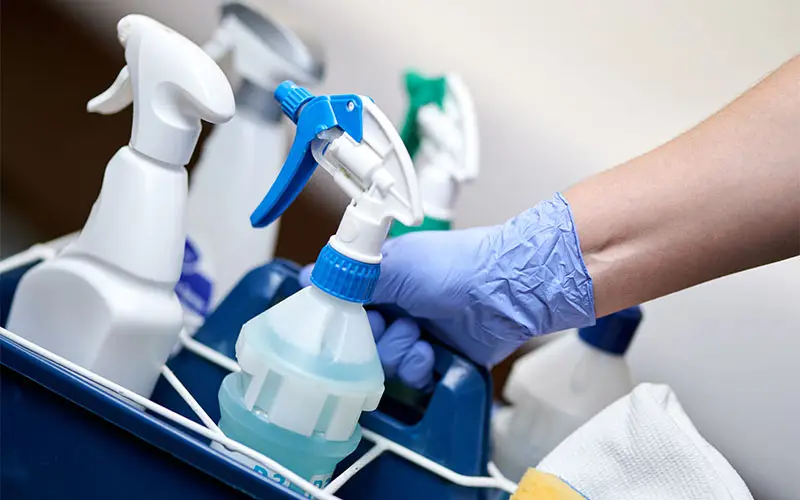
  • EPA-registered disinfectant (sprays, wipes or concentrate)
  • Hand soap and hand sanitizer refills
  • Paper towels, toilet tissue and facial tissue
  • Microfiber cloths and mop heads (color-coding by area helps avoid cross-contamination)
  • Disposable gloves for custodial staff
  • Trash liners
  • Spray bottles and labels for diluted concentrates

Order early. When illness picks up across the Carolinas, everyone reaches for tissues, wipes and sanitizer at the same time, and that's when shortages and delays happen.

Staff and custodial routines

Daily

  • Clean and disinfect high-touch surfaces at least once a day, more in busy areas
  • Clean and disinfect restrooms
  • Restock hand hygiene stations
  • Remove trash

Weekly

  • Deep-clean floors, entryways and mats
  • Wipe down less-touched surfaces like shelves, chair backs and windowsills
  • Check supply levels and reorder
  • Spot-check that staff are following label dwell times

When illness is going around

  • Increase high-touch cleaning to two or more times a day
  • Give extra attention to rooms where sick people spent time

Air and ventilation basics

  • Replace HVAC filters on schedule, and ask your HVAC technician whether your system can handle higher-efficiency filters
  • Bring in outdoor air where your system and the weather allow
  • Keep vents clear of furniture, boxes and supplies
  • Consider portable HEPA air cleaners for crowded rooms

Communication

  • Post handwashing and cover-your-cough signs in restrooms, entrances and breakrooms
  • Remind staff and students to stay home when sick
  • Share the cleaning schedule so people know what's done and when
  • Keep wipes near shared equipment and encourage people to use them

Need signage? We print custom posters, floor decals and table tents that match your building or school colors.

Offices vs. schools: what's different

Offices tend to share a lot of tech: conference room screens, hot desks, shared printers. Ask employees to wipe down their own workspace and focus custodial time on conference rooms, breakrooms and entry points. A clear stay-home-when-sick policy helps as much as any spray bottle.

Schools pack more people into less space, and younger students aren't always consistent about handwashing. Cafeterias, gyms, buses and the nurse's office need extra attention. Store cleaning products out of students' reach, follow your district's policies and label directions, and plan around the reality that custodial teams are often stretched thin.

Where automation helps

Floors take up a big chunk of custodial time, especially in hallways, cafeterias, gyms and lobbies. Autonomous floor scrubbers can handle those large areas on a set route, so your team can spend more of their shift on the high-touch surfaces that matter most during flu season. You also get consistent results night after night. Our facilities team can help you figure out whether autonomous cleaning makes sense for your building.

Get ready before the rush

The best time to prep for cold and flu season is before it hits your hallways. Herald's facilities team supplies offices and schools across South Carolina and North Carolina, and we can help you stock everything on this list, set up a reorder schedule and explore autonomous cleaning options. Email us at facilitiesservices@herald.group or visit herald.group to get a quote.

SEARCH ×

Search